Understanding Probate in the UK
Probate is the legal process of administering a deceased person’s estate. This includes identifying assets such as property, savings, and personal possessions, paying any debts or taxes owed, and distributing the remaining inheritance to beneficiaries.
March 08, 2026 10:51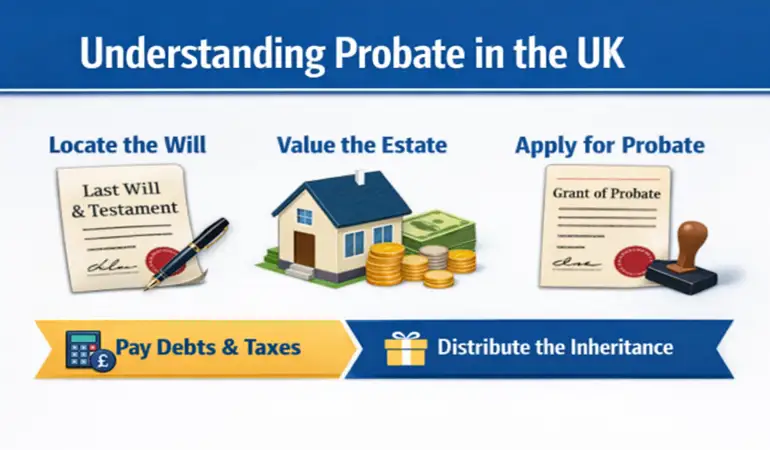
If the deceased left a will, the executor named in the document usually manages the estate. If there is no will, a close relative can apply to become the administrator.
Before probate can begin, the death must be officially registered, usually within five days in England and Wales. Once registered, relevant organisations and government departments should be informed, often through the “Tell Us Once” service.
Key Steps in the Probate Process
Although each estate is different, the UK probate process generally follows several main stages:
1. Locate the Will and Identify Executors
Finding the most recent will is essential because it names the executor responsible for administering the estate. If no will exists, the estate will be handled according to intestacy rules.
2. Value the Estate
Executors must identify and calculate the value of all assets and liabilities. This includes property, bank accounts, investments, debts, and personal possessions. Accurate valuation is crucial because it determines whether inheritance tax (IHT) is owed.
3. Report the Estate to HMRC
Details of the estate must be reported to HM Revenue & Customs. If full details are required, the IHT400 form must usually be submitted within 12 months of the person’s death before applying for probate.
4. Apply for the Grant of Probate
The executor applies for a legal document called the Grant of Probate, which gives them authority to access assets and administer the estate. Without this document, banks and other institutions may not release funds.
5. Pay Debts and Distribute Assets
Once probate is granted, the executor collects funds, settles outstanding debts and taxes, and distributes the remaining estate to beneficiaries according to the will or legal rules.
Common Mistakes to Avoid
Many people make avoidable mistakes during probate, which can delay the process or create legal risks.
One common error is failing to identify all assets and liabilities. Executors must thoroughly investigate bank accounts, investments, and debts to ensure nothing is overlooked. Another mistake is distributing inheritance before all debts and taxes have been paid, which could make the executor personally liable.
Executors should also consider protecting themselves from unknown creditors by placing official notices in publications such as the London Gazette. This step can help reduce personal financial risk during estate administration.
Practical Probate Tips
Handling probate becomes much easier when you stay organised and follow a clear process. Keep detailed records of financial information, correspondence, and decisions made during the administration of the estate. Secure any property or valuables belonging to the deceased and notify banks, insurers, and service providers as soon as possible.
Many people also benefit from seeking guidance or professional advice when dealing with complex estates, property, or tax issues. Online resources and probate guides can provide useful checklists, step-by-step instructions, and explanations of legal requirements.
Getting Free Probate Advice
If you are unsure about any part of the probate process, free guidance is available. The website Probate Tips and Free Advice
offers practical information to help executors understand their responsibilities and avoid costly errors.
By learning the key steps and staying organised, families can navigate probate more confidently. While the process may seem complicated at first, the right knowledge and advice can make managing an estate far more straightforward and less stressful during an already difficult time.
Check more details: Probate Tips
User Comments (0)




SPONSORS
Painters NewcastleTynemouth Roofing
Newcastle Roofs
Loughborough Roofing
247 Plumbing Newcastle
Newcastle Roofing
Handyman Newcastle
Masonry Painters
Loft Insulation Leeds
Loft Insulation London
Trustmark Law
Somerset Roofing
Will Writing Sheffield
Dave Van Newcastle
Conveyancing Middlesbrough
Manchester Roofing
Roofer Quotes
Half Hour Electricity
Will Writers Portal
Tradesmen Quotes